Septic System Installation Planning
What to gather for an authorized person’s site assessment, design, and health-authority filing.
Explore this topic
Septic system planning · Abbotsford
Property-specific planning for new systems, replacements, repairs, inspections, and maintenance—grounded in site assessment, records, and BC filing requirements.
Generated illustrative scene · not a company project photo
Lot Intelligence Studio
Choose a situation, then explore how proposed use and seasonal water change the questions. This tool cannot select a design or establish service.
Home loadTankDistributionTreatment fieldGenerated illustrative cutaway · not a company projectA new system begins with proposed use, property constraints, wells and buildings, equipment access, seasonal water, and an authorized person’s site assessment and design.
Six septic pathways
The appropriate path depends on the property, system condition, available records, and qualified assessment.
What to gather for an authorized person’s site assessment, design, and health-authority filing.
Explore this topicQuestions that can help distinguish component issues from a replacement pathway.
Explore this topicWhy site and soil conditions may lead an authorized person to specify an engineered option.
Explore this topicSymptoms and records to document before deciding whether a targeted repair is appropriate.
Explore this topicWhat an assessment may examine, what records help, and what cannot be guaranteed.
Explore this topicHow pumping helps manage tank solids and why maintenance depends on system and household use.
Explore this topic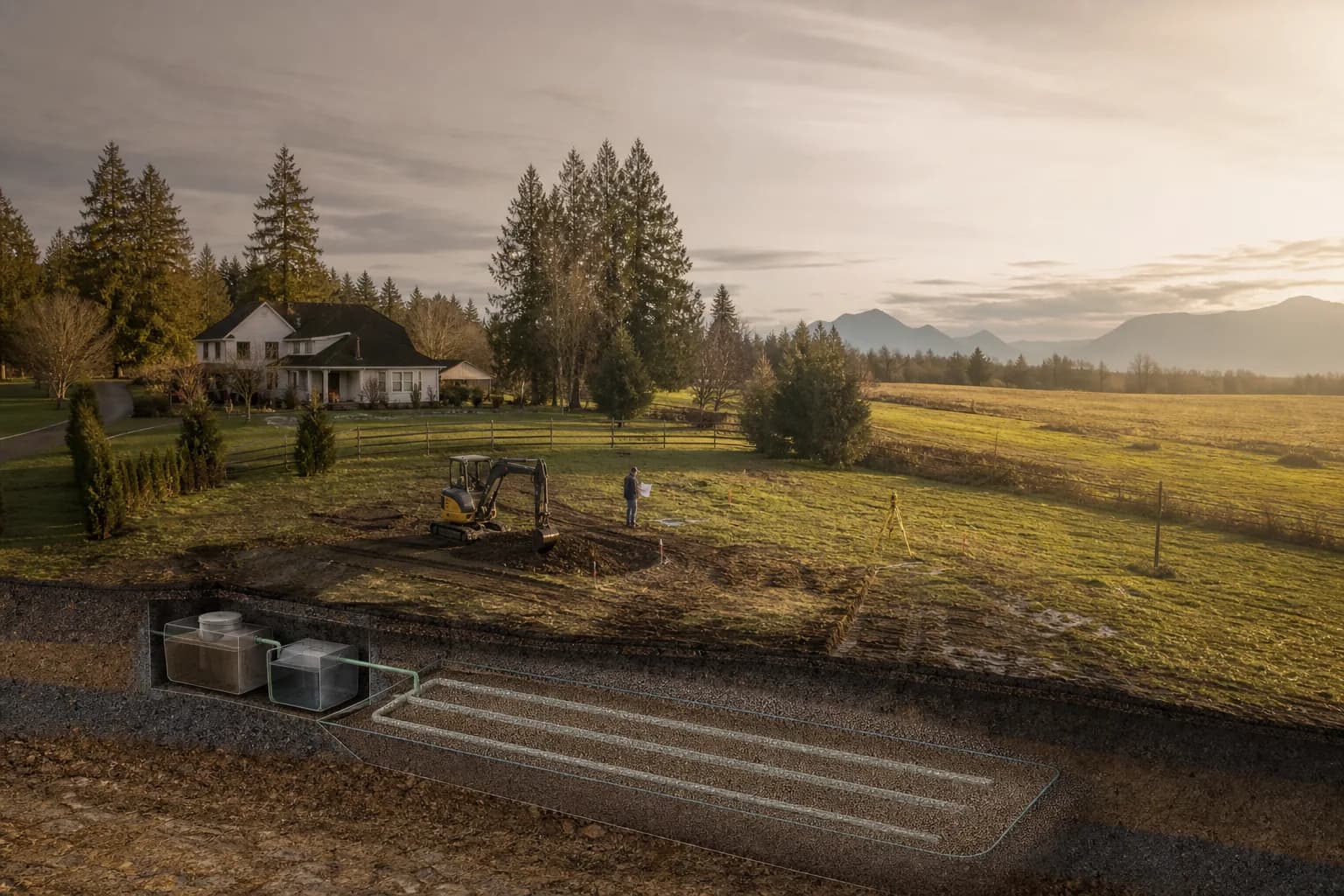
Read the land first
Before construction, proposed use, grade, access, water, setbacks, and the applicable site assessment must be considered together.
Generated illustrative scene · not a company project photo
Below the acreage
Each part has one job. The design succeeds when proposed use, tank, distribution, treatment media, and land conditions are considered together.
Share property detailsSolids and floatables stay in the tank while liquid moves onward. Tank condition, baffles, access, occupancy, and pumping history shape maintenance.
Distribution boxes, pumps, pressure systems, and laterals move effluent through the designed network. A fault here can mimic field failure.
Conventional fields, mounds, and other treatment approaches depend on a site-specific design, suitable loading, treatment depth, and protection from compaction.
Surface drainage, seasonal groundwater, landscaping, traffic, roots, and household water use can affect the long-term treatment area.
 Generated illustrative assessment scene
Repair or replace?
Pumping, access, baffles, pumps, controls, distribution components, or localized defects may be part of a qualified scope when the tank and treatment area remain serviceable.
Before the excavator
Some rural Abbotsford properties have poor-draining soils or high groundwater. The actual parcel requires assessment; an online description cannot select the design.
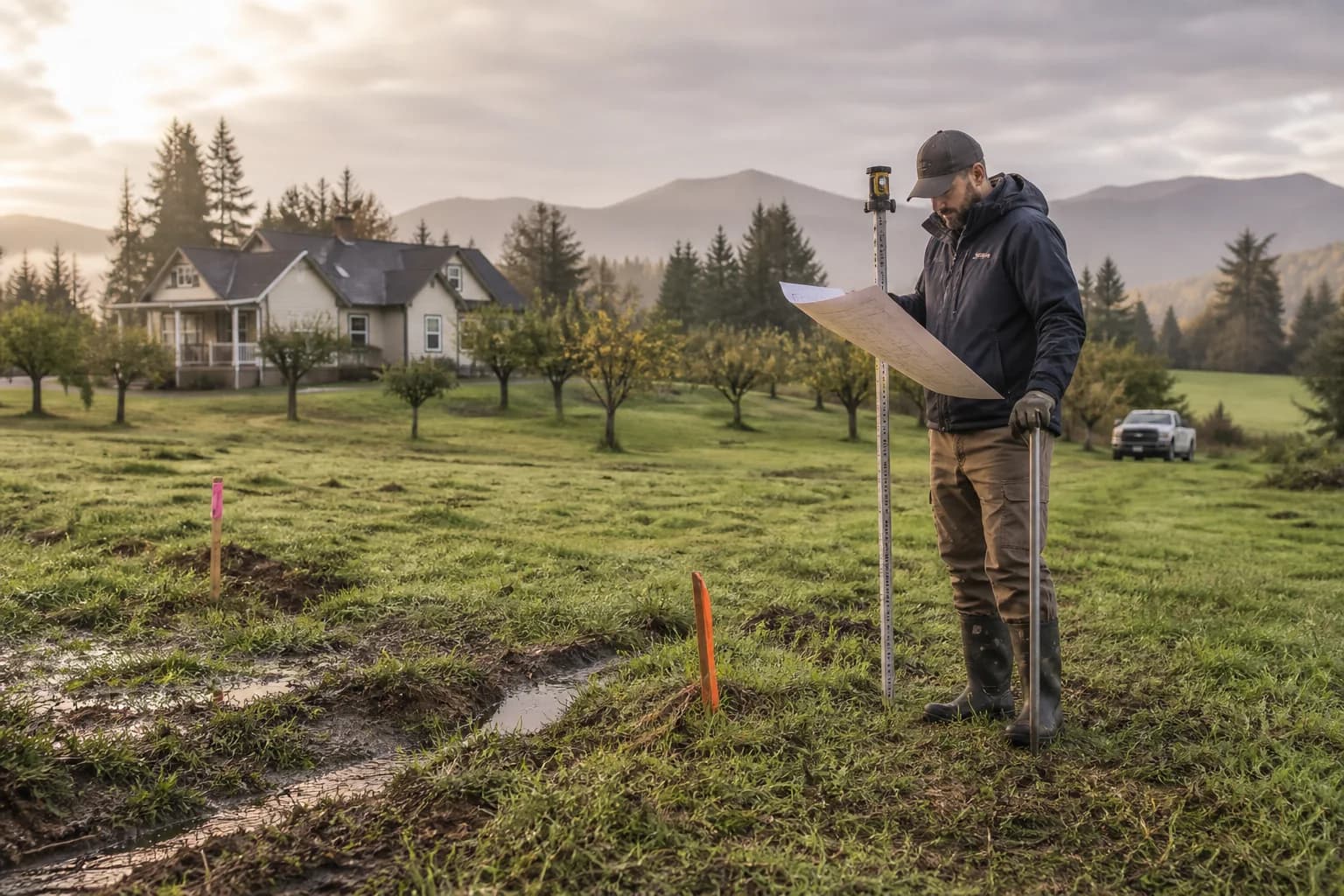
Dwelling plans, occupancy assumptions, and possible future changes.
Site assessment, soil conditions, drainage, and seasonal water.
Wells, buildings, parcel lines, water features, and existing services.
Safe access, slope, gates, trees, and possible restoration constraints.
Illustrative field assessment scene—not a company project photo.
Warning signs
Symptoms do not prove field failure. They indicate where qualified assessment may be appropriate.
Multiple fixtures slowing or returning after basic plumbing checks.
Persistent septic odour around access, tank, or treatment area.
Unusual saturation, lush strips, surfacing water, or soft ground.
Avoid contact with wastewater and seek appropriate help promptly.
High-level alarm, pump fault, or a dosing system behaving differently.
How it works
The first step is to document the reason for the inquiry, not assume repair or replacement.
Provide the parcel or community, proposed use, available records, and any system symptoms. Do not use this form for an emergency.
Locate any filed Record, site plan, maintenance plan, completion documents, and pumping history. Do not enter or excavate a system.
An authorized person determines the site assessment, design, and filing path. Other work must stay within the responsible person’s verified role.
Confirm credentials, written scope, the applicable Fraser Health filing, and any City requirements directly with the people engaged for the property.
Regional property context
Abbotsford is the primary geographic context. For nearby places, confirm the parcel jurisdiction, public sewer availability, and local requirements.
Start with the address, proposed use, available records, and any observed system changes.
Septic questions
Common questions about onsite sewerage planning, assessment, filing, and maintenance.
No. Wet ground can involve drainage, use, tank or pump conditions, distribution, field distress, or seasonal water. Avoid contact with wastewater and obtain a site-specific assessment.
When site assessment shows that soil, seasonal water, treatment depth, setbacks, or other conditions require another approach, an authorized person may design an appropriate system. A web page cannot select the type for a property.
No. Pumping removes tank solids; an assessment examines defined conditions and records; repair addresses an identified defect; replacement is a separate site-specific path. Each requires the appropriate qualified person.
Proposed use and wastewater flow, site assessment and design, system type, access, materials, excavation, soil and water conditions, setbacks, pumps or controls, decommissioning, restoration, filings, and site discoveries.
No. Abbotsford and nearby place names provide geographic context. Confirm the parcel jurisdiction, public sewer availability, and project requirements for the actual address.
Share the property context